
Course
B.Sc. Psychology (Hons.)
Duration
4 years
Eligibility
10+2 in any stream
Subject
Human Behaviour, Human Psychology, Social Psychology, Development Psychology, Research Methods
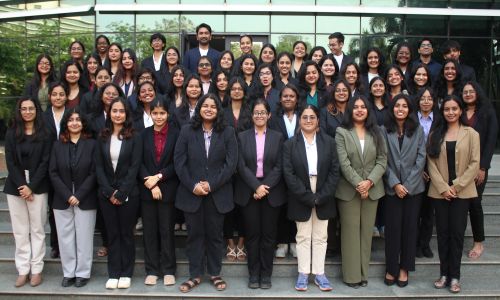
B.Sc. Psychology (Hons.)
Career Opportunities in the field – Careers Counsellors, Clinical Psychologist, Health Psychologist, Counselling Psychologist, Social Worker, Teacher, Corporate Counsellors etc.
Course Objectives for B.Sc. Psychology (Hons.) (as per NEP 2020)
This course is designed to provide students with a comprehensive understanding of the fundamental concepts and advanced areas in psychology. It aims to equip students with both theoretical knowledge and practical skills, fostering critical thinking and a scientific approach to psychological inquiry. The program is structured to promote self-exploration, academic growth, and professional development, encouraging students to engage with contemporary psychological issues and research. Furthermore, it prepares students for diverse career paths in psychology, counselling, social services, and research.
Pedagogy for B.Sc. Psychology (Hons.) Course
The teaching-learning process is designed to be dynamic and student-centric, utilizing a variety of pedagogical techniques to ensure deep engagement with course material. These include:
- Lectures and Interactive Discussions: Traditional lectures are complemented by group discussions, where students explore and debate psychological concepts and theories.
- Experiential Learning and Practical Engagement: Students participate in hands-on activities, psychological experiments, case studies, and fieldwork to apply theoretical knowledge to real-world situations.
- Projects and Presentations: Individual and group projects, along with class presentations, help students develop research skills and present their findings in an academic setting.
- Workshops and Seminars: Regular workshops, seminars, and guest lectures introduce students to current research, emerging topics, and professionals in the field.
- Use of ICT and Digital Tools: The integration of technology in teaching, including multimedia presentations, online learning platforms, and psychological assessment software, makes the learning process interactive and up-to-date.
- Practicum: A vital component of the course, practicum sessions provide students with opportunities to engage in psychological assessments, counselling techniques, and community-based mental health services.
Encouraging students to apply their learning in real-life contexts and gain exposure to contemporary social and psychological challenges, preparing them for both academic and professional opportunities.
B.Sc. Psychology (Hons.) Program Structure:
The B.Sc. Psychology (Honours) program under the FYUGP 2025 model is structured to provide a comprehensive education through a combination of major, minor, multidisciplinary, AECC, SEC, and VAC courses. The program follows a credit-based system where 1 credit equals 15 hours of academic engagement. The key components are as follows:
- Majors:
- Majors form the core of the curriculum, covering essential psychological concepts and skills. These courses are assigned 4 credits each, with a total of 25 major courses spread across eight semesters, contributing significantly to students’ foundational and advanced knowledge in psychology.
- Credits: Each major course carries 4 credits (1 credit = 15 hours of learning), totalling 100 credits over the program duration.
- Minors:
- Minor courses complement the majors, offering specialized knowledge in areas related to psychology like organizational behaviour, cyber psychology, and human resources management.
- Credits: Each minor course carries 4 credits, with a total of 8 minor courses contributing 32 credits to the program.
- Multidisciplinary Courses:
- These courses provide exposure to other disciplines like Sociology, Finance, and Mass Media, enhancing the students’ ability to approach psychological issues from broader social, economic, and cultural perspectives.
- Credits: Each multidisciplinary course carries 4 credits, with a total of 3 courses contributing 12 credits.
- Ability Enhancement Compulsory Courses (AECC):
- AECC courses focus on essential skills such as Communication Skills, Academic writing, and Writing for Media, preparing students for professional environments.
- Credits: These courses carry 2 credits each, amounting to 8 credits in total over four semesters.
- Skill Enhancement Courses (SEC):
- SEC courses focus on developing practical skills in psychology, such as fine arts, psychological first aid, and public health management.
- Credits: SEC courses typically carry 2 or 3 credits each, contributing 9 credits in total across the program.
- Value-Added Courses (VAC):
- VACs emphasize community engagement, universal human values, and digital and technological solutions, fostering a well-rounded education.
- Credits: These courses carry 2 credits each, with a total of 8 credits dedicated to VACs.
- Summer Internships:
- Internships provide practical experience and are included after the fourth and sixth semesters. Each internship carries 2 credits, adding real-world relevance to the academic journey.
- Research vs. Non-Research Track (Semesters VII and VIII):
- In the final year, students choose between a research-oriented track (which includes a 12-credit dissertation in the eighth semester) or a professional skills track (which includes specialized courses in areas like School Psychology and Geriatric Psychology).
- Credits: The research track includes 20 credits in Semester VII and 12 credits in Semester VIII, while the non-research track includes 20 credits in Semester VII and 12 credits in Semester VIII.
Program Structure
The entire program constitutes 173 credits, ensuring a broad and in-depth education in psychology, with focus on both theory and practical application.
This credit system follows the standard model where 1 credit equals 15 hours of academic work, making the B.Sc. Psychology (Hons.) program rigorous and well-rounded.
FYUGP 2025 - B.Sc. PSYCHOLOGY (HONS)
| SL No. | COURSE | COURSE TITLE | CREDITS |
|---|---|---|---|
SEMESTER I (Foundation) |
|||
|
1 |
MAJOR 1 |
General Psychology |
4 |
|
2 |
MAJOR 2 |
Developmental Psychology |
4 |
|
3 |
MINOR 1 |
Indian Psychology Application |
4 |
|
4 |
MULTIDISCIPLINARY – 3 |
Sustainable Development Goals (SDGs) |
4 |
|
5 |
AECC – 1 |
Communication Skills-I |
2 |
|
6 |
SEC – 1 |
Cyber Hygiene and Digital Safety |
2 |
|
7 |
VAC – 1 |
Community Engagement |
2 |
Total |
22 |
||
| SL No. | COURSE | COURSE TITLE | CREDITS |
|---|---|---|---|
SEMESTER II (Foundation) |
|||
|
1 |
MAJOR 3 |
Cognitive Psychology |
4 |
|
2 |
MAJOR 4 |
Bio Psychology |
4 |
|
3 |
MINOR 2 |
Group Development and Team Building |
4 |
|
4 |
MULTIDISCIPLINARY – 2 |
Mobile Film Making |
4 |
|
5 |
AECC – 2 |
Communication Skills-II |
2 |
|
6 |
SEC – 2 |
Understanding Self and Others |
2 |
|
7 |
VAC – 2 |
Universal Human Values |
2 |
Total |
22 |
||
| SL No. | COURSE | COURSE TITLE | CREDITS |
|---|---|---|---|
SEMESTER – III (Core and Skill Development) |
|||
|
1 |
MAJOR 5 |
Statistics for Psychology |
4 |
|
2 |
MAJOR 6 |
Cognition and Experimental Psychology |
4 |
|
3 |
MINOR 3 |
Community Psychology |
4 |
|
4 |
MULTIDISCIPLINARY – 3 |
Social Media Marketing |
4 |
|
5 |
AECC – 3 |
Writing for Media |
2 |
|
6 |
SEC – 3 |
Psychological First Aid |
2 |
|
7 |
VAC – 3 |
Health and Wellbeing |
2 |
Total |
22 |
||
| SL No. | COURSE | COURSE TITLE | CREDITS |
|---|---|---|---|
SEMESTER – IV (Core and Application) |
|||
|
1 |
MAJOR 7 |
Research Methodology |
4 |
|
2 |
MAJOR 8 |
Health Psychology |
4 |
|
3 |
MINOR 4 |
Cyber Psychology |
4 |
|
4 |
MINOR 5 |
Positive Psychology |
4 |
|
5 |
AECC – 4 |
Developing Observational skills |
2 |
|
6 |
SEC – 4 |
Listening skills and observation based
report writing
|
3 |
|
7 |
VAC – 4 |
Digital and Technological Solutions |
2 |
Total |
23 |
||
SUMMER INTERNSHIP |
2 |
||
B.Sc. PSYCHOLOGY (HONS)
| SL No. | COURSE | COURSE TITLE | CREDITS |
|---|---|---|---|
SEMESTER – V (Advanced Psychology and Specialization) |
|||
|
1 |
MAJOR 9 |
Introduction to Abnormal Psychology |
4 |
|
2 |
MAJOR 10 |
Personality Theories |
4 |
|
3 |
MAJOR 11 |
Social Psychology |
4 |
|
4 |
MAJOR 12 |
Psychological Testing and Tool Development |
4 |
|
5 |
MAJOR 13 |
Evolutionary Psychology |
4 |
|
6 |
MINOR 6 |
Qualitative Research Methods
|
4 |
Total |
24 |
||
| SL No. | COURSE | COURSE TITLE | CREDITS |
|---|---|---|---|
SEMESTER – VI (Advanced Psychology and Specialization) |
|||
|
1 |
MAJOR 14 |
Introduction to Neuropsychology |
4 |
|
2 |
MAJOR 15 |
Psychology and Artificial Intelligence |
4 |
|
3 |
MAJOR 16 |
Scientific Writing |
4 |
|
4 |
MAJOR 17 |
Inclusiveness and diversity in India Context |
4 |
|
5 |
MAJOR 18 |
Educational Psychology |
4 |
|
6 |
MINOR 7 |
Introduction to sports psychology |
4 |
Total |
24 |
||
| SL No. | COURSE | COURSE TITLE | CREDITS |
|---|---|---|---|
SEMESTER – VII (Research-oriented track) |
|||
|
1 |
MAJOR 19 |
Counselling Psychology & Psychotherapy |
4 |
|
2 |
MAJOR 20 |
Behaviour Modification (Applied Behaviour
Analysis)
|
4 |
|
3 |
MAJOR 21 |
Policy Framework in Behavioural & Mental Health |
4 |
|
4 |
MAJOR 22 |
School Psychology |
4 |
|
5 |
MINOR 8 |
Forensic Psychology |
4 |
Total |
20 |
||
| SL No. | COURSE | COURSE TITLE | CREDITS |
|---|---|---|---|
SEMESTER – VII (Non-Research track – Professional skills) |
|||
|
1 |
MAJOR 19 |
Counselling Psychology & Psychotherapy |
4 |
|
2 |
MAJOR 20 |
Behaviour Modification (Applied Behaviour
Analysis)
|
4 |
|
3 |
MAJOR 21 |
Policy Framework in Behavioural & Mental Health |
4 |
|
4 |
MAJOR 22 |
School Psychology |
4 |
|
5 |
MINOR 8 |
Forensic Psychology |
4 |
Total |
20 |
||
| SL No. | COURSE | COURSE TITLE | CREDITS |
|---|---|---|---|
SEMESTER – VIII (Research-oriented track) |
|||
|
1 |
|
Dissertation |
12 |
Total |
12 |
||
| SL No. | COURSE | COURSE TITLE | CREDITS |
|---|---|---|---|
SEMESTER – VIII (Non-Research track – Professional skills) |
|||
|
1 |
MAJOR 23 |
Organisational Behaviour |
4 |
|
2 |
MAJOR 24 |
Rehabilitation Psychology
|
4 |
|
3 |
MAJOR 25 |
Human Resource management (IHRM) |
4 |
Total |
12 |
||
GRAND TORAL |
171 |
||
To complete the B.Sc. Psychology (Hons.) program, students must pass all core courses, which provide a comprehensive foundation in psychology. Furthermore, students must complete two internships, offering real-world experience in professional environments relevant to their specialization. Finally, students must undertake and submit a dissertation (who choose research-oriented track) in their final semester, which involves conducting original research under faculty supervision. This combination of coursework, practicals, internships, and research ensures that graduates are well-prepared for professional practice and further academic pursuits.
Research Seminars and Workshops
Regular seminars and workshops are held to enhance research skills, focusing on advanced statistical methods, qualitative research techniques, and writing for publication.
Collaborations and Conferences
Students will be encouraged to participate in national and international conferences and collaborate with other institutions on research projects, providing exposure to the global psychology community.
To ensure the highest standards of academic excellence, periodic revisions of the courses are conducted in consultation with students, faculties, the academic committee, and the academic council of the school and university. Courses may be added or removed from the syllabus to align with evolving trends and current requirements in psychology, incorporating updates from the American Psychological Association (APA) and other relevant national and international bodies.
Eligibility Criteria
Academic Requirements: A Pass in Higher Secondary Exam (12th Grade) with at least 60% marks from any recognized state or central board of examination. Students who are expecting results of 12th Exam can also apply.
Admission Process:
- Application: Fill out the application form online at www.xim.edu.in.
- Interview: Shortlisted candidates will be invited for a personal interview, which can be conducted in person or virtually.
- Selection: The final selection will be based on academic performance, interview results, and any relevant creative contributions.
Academic System
The Department of Psychology follows a semester-based pattern, with the entire program spread over eight semesters. The curriculum includes theoretical and practical courses, ensuring a well-rounded education in psychology. Students are required to earn 173 credits to complete the program. These credits are divided across core courses, practicals, internships, and the dissertation (Research-oriented track).
Degree
XIM University awards a B.Sc. (Hons) Degree in Psychology to students who successfully complete the program with a minimum of 173 earned credits, meeting the prescribed academic standards. This includes successfully completing all coursework, two internships, practicals, a final dissertation (research-oriented track), and adherence to the minimum attendance requirements outlined in the Academic Manual of Policies. The degree is conferred upon qualified students during the university’s Annual Convocation, typically held in the month of March or April.
Hostel and Facilities
Accommodation: On-campus accommodation is available, with separate hostels for male and female students. The hostels have all the necessary amenities, including Wi-Fi, study rooms, and recreational facilities.
Library: The university library offers a vast collection of books, journals, and online resources in psychology and related fields, with access to international databases and e-journals.
Health and Wellness: The university provides health services, including psychological counselling and wellness programs, to ensure the well-being of all students.
Contact Information
For more information about the B.Sc. Psychology (Hons.) program, please visit our website at www.xim.edu.in or contact us via email at [email protected] or [email protected].